What if your home did more than give you a place to sleep? In Venice, some live-work homes make it possible to move between focused work, creative output, and daily life without ever feeling fully cut off from the neighborhood around you. If you have been curious about how these spaces actually function day to day, this guide will show you what they tend to feel like, how the rhythm of the neighborhood shapes daily routines, and where the real tradeoffs tend to show up. Let’s dive in.
Why Venice Suits Live-Work Living
Venice has long supported a mix of uses that makes live-work living feel natural rather than forced. The City of Los Angeles’ Venice Local Coastal Program describes the area as a blend of residential, commercial, minor industrial, and mixed-use structures, including live/work artist studios.
City Planning also identifies Commercial and Artcraft Districts as places where artisans may live, create, and market their work. That matters because it helps explain why live-work homes in Venice often feel like part of the neighborhood’s DNA instead of a newer trend layered onto it.
Just as important, Venice is widely recognized for its creative identity. The Venice Chamber describes it as one of Los Angeles’ most creative places to work, play, and visit, with artists’ colonies and a thriving business community.
That creative backdrop influences the experience of living here. If you want a home that supports both private life and a working routine, Venice offers a setting where that overlap already feels culturally familiar.
How Venice Live-Work Homes Feel Inside
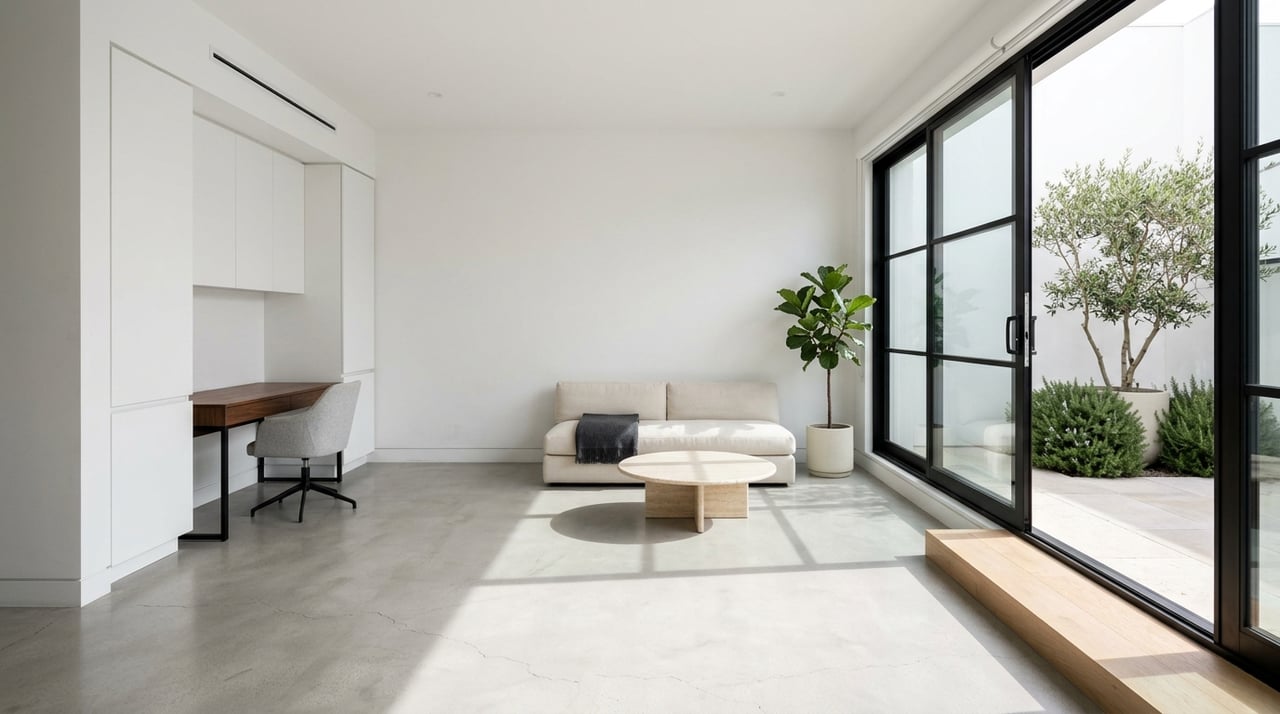
Most Venice live-work homes do not read like a standard single-purpose house. Instead, they often emphasize light, flexibility, and partial separation between living space and working space.
Examples highlighted in design coverage show a few recurring patterns. One Venice live/work loft uses a private inner courtyard and translucent panels to bring in natural light while preserving privacy.
Another example shows a 50/50 live-work split, with residential spaces below workspaces, plus a mix of open-plan areas and smaller meeting rooms. A separate Venice project features open interior planning, large window frontage, ambient side lighting, and design choices that take advantage of daylight and sea breezes.
Taken together, these layouts suggest a home that feels more like a studio-loft hybrid or a compact creative compound than a conventional residence. If you are picturing a rigid divide between office and home, Venice spaces often take a more layered approach.
What Daily Life Looks Like
Day to day, the appeal is not only inside the home. A Venice live-work address often places errands, inspiration, and social time within a compact radius, which can make your routine feel more fluid.
Abbot Kinney Boulevard is described as a few blocks from the beach and lined with boutiques, galleries, restaurants, and bars. The Venice Community Plan also describes nearby core areas as pedestrian-oriented and filled with retail, restaurants, and services.
That kind of setting can compress your daily schedule in a useful way. You might step out for coffee, return for a work block, meet someone nearby, and still be home in minutes rather than building your day around long drives.
The neighborhood also brings a strong sense of visual and cultural activity. The Venice Ocean Front Walk includes specialty shops, restaurants, uniquely designed residences, street performers, artists, and fortune tellers, all sharing the same corridor.
A Routine With Built-In Variety
One of the more distinctive parts of Venice live-work living is the way the neighborhood can shape your routine without much effort. The day can move from quiet indoor focus to outdoor energy quickly.
A morning coffee stop might mean Zinqué, which the Venice Chamber calls the neighborhood’s coffee and wine bar. On weekends, browsing Artists & Fleas can add a different rhythm, with independent artists, designers, vintage collectors, crafters, and food vendors all part of the mix.
Nearby cultural anchors extend that sense of creative continuity. Venice Arts, LA Louver, and Beyond Baroque can become part of the broader routine around your home, whether you are looking for inspiration, community, or simply a break in the day.
This is one reason Venice can feel so distinct. Your home may serve as the anchor, but the surrounding streets often become part of how the space functions in real life.
Outdoor Rhythm Matters Here
Venice also supports a lifestyle that regularly moves outside. Discover Los Angeles highlights the pedestrian-only Venice Walk Streets, which sit steps from the beach and trace back to Abbot Kinney’s original vision.
That can add a different cadence to your day. A short walk between meetings, a reset near the water, or an evening stroll can feel like a natural extension of being at home rather than a separate event that takes planning.
The evening atmosphere adds another layer. Discover Los Angeles describes a setting shaped by roller skaters, musicians, and artists, which gives parts of Venice a sense of motion and spontaneity that many residents value.
For someone using a home as both residence and workspace, that outdoor access can be more than a lifestyle perk. It can help create natural pauses in the day and make the home feel less closed in.
The Real Tradeoffs to Think Through
The biggest question with live-work living is usually not style. It is whether the home creates enough separation for you to feel present in both modes.
The strongest Venice examples address that issue through design. Courtyards, separate floors, translucent partitions, smaller meeting rooms, and carefully planned sightlines can all help create a mental shift between work and home.
That separation matters more than many buyers first expect. If your dining area also becomes your conference table and your living room always feels one email away, the home can lose some of its restorative quality.
Privacy is another practical issue. Venice live-work layouts often use design elements that allow light to flow while still shielding parts of the home from direct exposure, which can be especially helpful if you host visitors, clients, or collaborators.
Who These Homes Tend to Fit Best
Venice live-work homes are often best suited to people who want flexibility without giving up design or location. Based on the neighborhood’s art-forward uses and the way these homes are designed, the best fit is often a creative professional or remote worker who wants a home that can also function as a studio, showroom, or editing space.
That does not mean the appeal is limited to one type of buyer. You may also be drawn to these homes if you value a day that blends private living, walkable surroundings, and a strong connection to Venice’s cultural texture.
The key is being honest about how you actually live. If you want strict compartmentalization, a traditional home may feel easier. If you prefer adaptability, natural light, and a routine shaped by nearby cafés, galleries, and the beach, a Venice live-work property may feel especially compelling.
What to Notice When You Tour One
If you are considering a Venice live-work home, it helps to look beyond the headline idea and focus on how the space will support your actual routine. The right home should not just look interesting. It should work well on an ordinary Tuesday.
As you tour, pay attention to:
- How clearly the home separates living and working zones
- Whether natural light supports both residential comfort and daytime work
- How much privacy the layout provides
- Whether there are quieter areas for calls, meetings, or focused tasks
- How easily you can step into the neighborhood for coffee, errands, or a reset
- Whether outdoor space, courtyards, or breezeways help the home feel balanced
Small design details often make the biggest difference over time. A flexible room, a private courtyard, or a better transition between floors can shape daily comfort more than square footage alone.
If you are exploring Venice with an eye for design, lifestyle, and long-term fit, working with an advisor who understands how these homes function beyond the listing photos can make the search far more productive. For a discreet conversation about Venice properties and refined Westside opportunities, connect with Kathy Marshall.
FAQs
What makes Venice live-work homes different from a standard house?
- Venice live-work homes often emphasize flexible layouts, natural light, and partial separation between residential and work areas rather than a fully traditional floor plan.
What does daily life around Venice live-work homes usually feel like?
- Daily life often feels layered and walkable, with nearby access to cafés, retail, galleries, restaurants, outdoor spaces, and the beach shaping the routine.
What design features help a Venice live-work home function well?
- Features such as courtyards, separate floors, translucent partitions, smaller meeting areas, large windows, and thoughtful sightlines can help balance privacy, workflow, and comfort.
Who is a Venice live-work home usually best for?
- These homes tend to suit creative professionals and remote workers who want a flexible home environment that can also support studio, showroom, or production-style use.
What should you look for when touring a Venice live-work home?
- You should focus on how the layout handles separation, privacy, daylight, quiet work areas, and access to the surrounding neighborhood for everyday convenience and rhythm.